Frequently Asked Questions
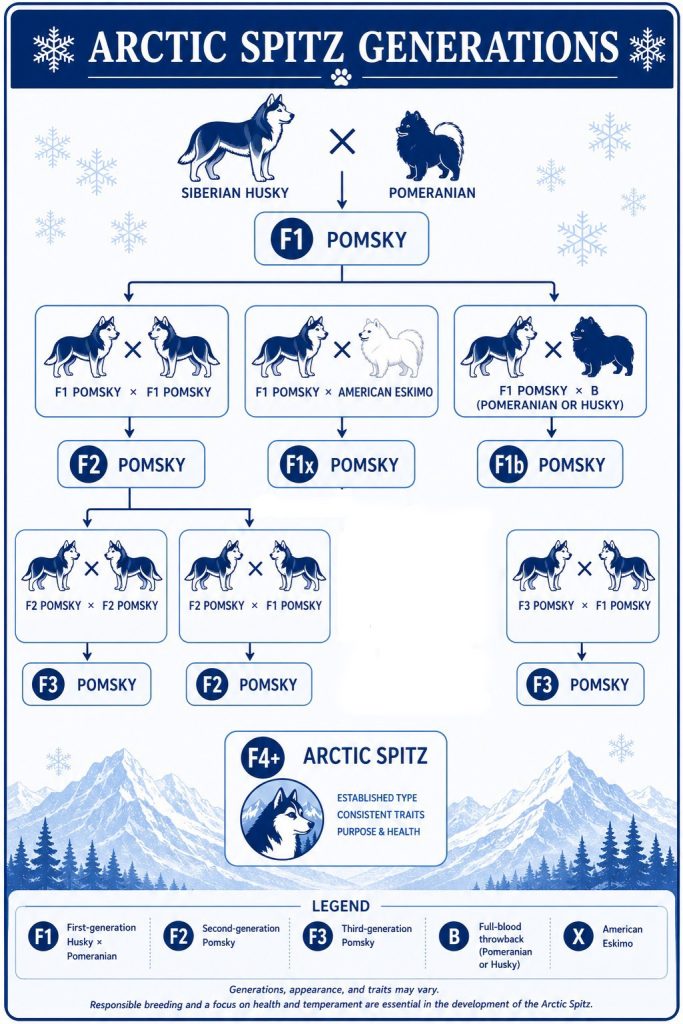
What is the difference between a Pomsky, Miniature Husky, Alaskan Klee Kai, and Arctic Spitz?
Pomsky – a mix between a Pomeranian and a Husky. As a mixed breed, these dogs are NOT currently recognized by the American Kennel Club (AKC), and cannot be “papered” as such.
Miniature Husky – This term once referred to Siberian huskies that had been bred down to a smaller size. They were not a separate breed, nor did the AKC ever recognize them as a distinct type of Siberian Husky. However, now it is used as an umbrella term for any breed or mix of breeds that creates a dog with the appearance of a small husky.
Alaskan Klee Kai – developed in Alaska in the 1970’s-1980’s by breeding Alaskan Huskies, Siberian Huskies, American Eskimos, and Schipperkes. The purpose was to create a companion-sized version of the Alaskan Husky. The breed was accepted into the AKC’s Foundation Stock Service (AKC FSS) in 2020.
Arctic Spitz – the proposed name for pomskies as they work toward AKC recognition. The AKC requires a minimum of 3 parent breeds in order for any new breed to become recognized. For this reason, Pomsky breeders who are working toward this goal are also introducing American Eskimo into their lines. We prefer the term ‘Arctic Spitz’ over ‘pomsky’ because we feel that it more accurately describes our dogs (which are no longer a mix of only two breeds), and also avoids the negative connotation of terms such as “designer dog” or “backyard bred” that so frequently accompany the term ‘pomsky’.
What is the purpose and goal in creating these dogs?
The purpose of a well-bred Arctic Spitz is to serve as an ideal companion for families with a wide variety of living situations and activity levels. Many people love the stunning looks and humor of a Siberian Husky, but in today’s world, families need a dog that is not only more manageable for kids and adults due to their size, but also more easily trainable. Our goal is to create a dog that is both social with others and affectionate with their people, beautiful, intelligent AND willing to please, humorous, and able to be active or a couch potato! Can you really fit all of that in one package? We truly believe the Arctic Spitz can and will!
If the Alaskan Klee Kai is already recognized, then why breed something else?
The significant difference between the AKK and the Arctic Spitz (and the reason we prefer Arctic Spitz) is in temperament. The breed standard for AKK’s describes them as having “a sensitive and reserved nature” with unfamiliar people and situations. In contrast, the Arctic Spitz is described as being “outgoing, confident, but non-aggressive and social with people and other dogs.“
Do you have a breed standard?
Yes! The breed standard can be seen here.
How big do Arctic Spitz get?
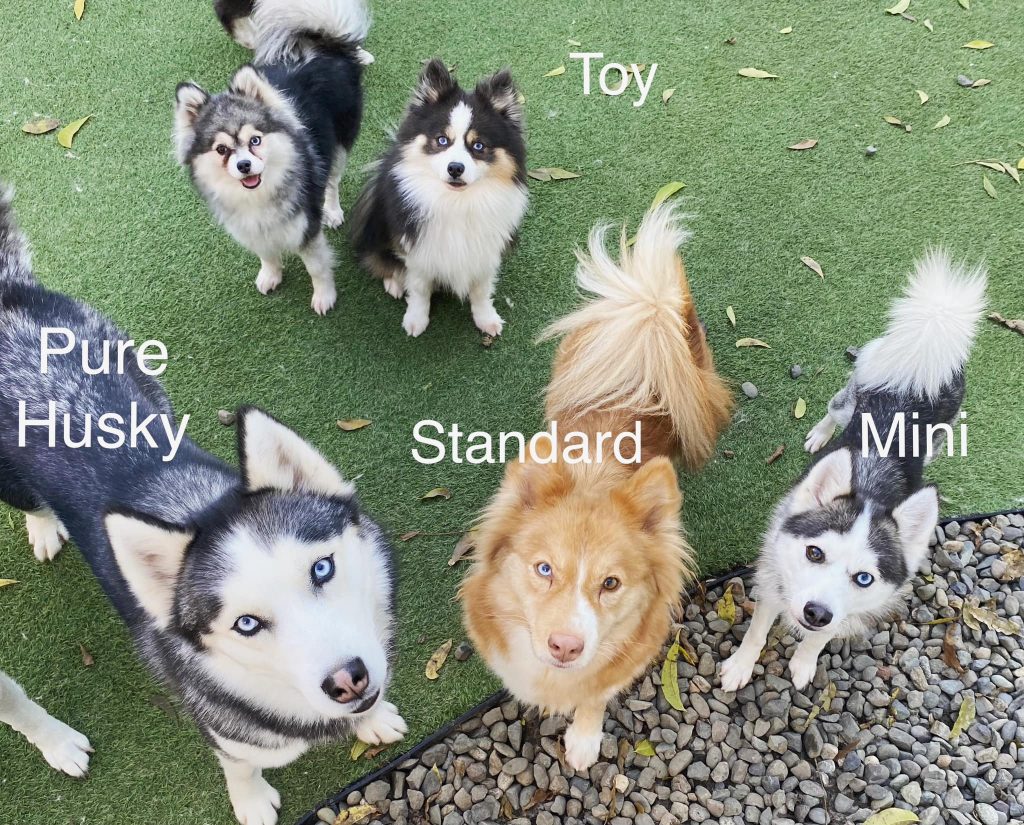
As a breed in development, Arctic Spitz can vary significantly in size, and no breeder can guarantee that a puppy will be a certain size full-grown. However, by looking at the parents and growth charts we can get a pretty good idea. There are 3 different sizes included in the Breed Standard:
Toy — 11-13″ at the shoulder (typically 7-15 lbs)
Mini — 13.01-16″ at the shoulder (typically 12-20 lbs)
Standard — 16.01-18″ at the shoulder (typically 20-35 lbs)
What is F1, F1b, F2, etc?
This refers to which generation a puppy is. When you cross a purebred Siberian Husky with a purebred Pomeranian, you get a First Generation Pomsky (F1).
NOTE: Generation does NOT necessarily affect size. There have been toy-sized pups born in an F1 litter, and there are many pups that are F4 and beyond that have purposely been bred to be standard-sized.